

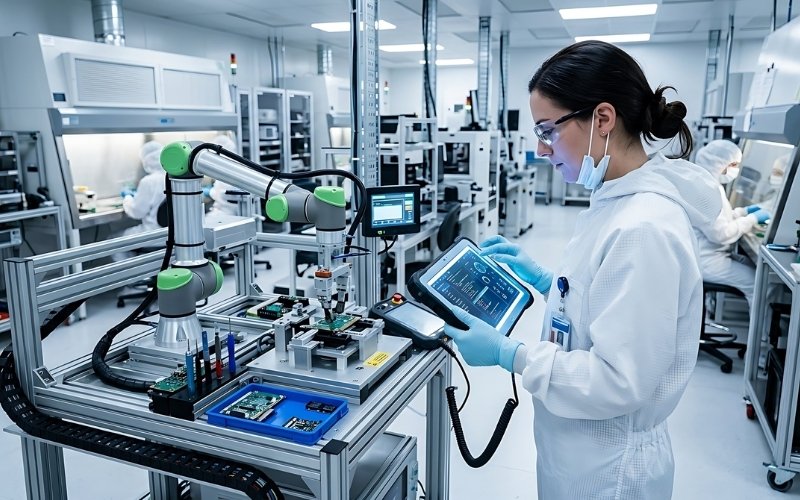
Pharmaceutical manufacturing requires more than automated production. Manufacturers also need reliable electronic records, controlled access, traceable activities, and systems that support data integrity and regulatory requirements.
21 CFR Part 11 Automation brings these considerations into the design of computerized systems used for pharmaceutical manufacturing. By integrating automation, data management, electronic records, audit trails, and controlled user access, manufacturers can build systems that support compliant and connected production environments.
For pharmaceutical companies in India, implementing automation with compliance requirements considered from the beginning can help create a more structured approach to manufacturing data and system management.
What Is 21 CFR Part 11 Automation?
21 CFR Part 11 Automation refers to the use of automated and computerized systems designed to support the requirements associated with electronic records and electronic signatures under FDA 21 CFR Part 11.
In a pharmaceutical manufacturing environment, automation systems may generate, process, store, or display electronic data. This can include information associated with:
- Batch manufacturing
- Production processes
- Equipment operation
- Process parameters
- User activities
- Electronic records
- Audit trails
- Alarms and events
- Quality-related information
The automation architecture should therefore consider data integrity, user access, record management, and traceability alongside normal control and monitoring functions.
Why 21 CFR Part 11 Matters in Pharmaceutical Manufacturing
Pharmaceutical plants increasingly depend on computerized systems for production, monitoring, data collection, and process control.
Without appropriate controls, managing electronic records across multiple systems can become complex.
A well-designed automation architecture can help organizations establish controlled processes for:
Data Collection → Processing → Electronic Records → Review → Traceability
This is particularly relevant for pharmaceutical manufacturing environments where production and quality-related information must be managed systematically.
Key Elements of 21 CFR Part 11 Automation
A 21 CFR Part 11-oriented automation strategy can consider several important areas.
1. Electronic Records
Automation systems can generate and maintain electronic records associated with manufacturing processes.
Examples may include:
- Batch records
- Process information
- Equipment records
- Production data
- User activities
- Alarm and event information
The system architecture should define how these records are generated, stored, accessed, and reviewed.
2. Electronic Signatures
Where electronic signatures are applicable, computerized systems need appropriate controls around user identity and authorization.
Electronic signatures can help associate an electronic action or approval with an authorized user.
3. Audit Trails
Audit trails provide a record of relevant system activities and changes.
In applicable systems, audit-trail functionality can help organizations understand:
- Who performed an action
- What activity occurred
- When the activity occurred
- What information was changed
This supports greater traceability of electronic records.
4. User Access Control
User access should be appropriately controlled according to roles and responsibilities.
A pharmaceutical automation environment may include different users such as:
- Operators
- Engineers
- Maintenance teams
- Quality personnel
- Supervisors
- Administrators
Role-based access can help ensure that users have access appropriate to their responsibilities.
21 CFR Part 11 and Data Integrity
Data Integrity Pharma Manufacturing is closely connected with computerized automation systems.
Manufacturing data should remain reliable, traceable, and appropriately controlled throughout its lifecycle.
Automation systems can support data integrity by providing structured mechanisms for:
- Data collection
- User authentication
- Access control
- Audit trails
- Electronic records
- Data storage
- Data review
- System traceability
However, automation alone does not automatically make a pharmaceutical process compliant. The complete system, procedures, controls, validation activities, and intended use need to be appropriately assessed.
Role of PLC, HMI and SCADA in 21 CFR Part 11 Automation
A pharmaceutical automation system can involve multiple technology layers.
PLC
The PLC provides control logic for equipment and processes.
HMI
The HMI provides an operator interface for interacting with machines and viewing process information.
SCADA
SCADA provides supervisory monitoring, visualization, data collection, and interaction with connected automation systems.
Industrial Network
Industrial networking connects automation devices and systems for communication and data exchange.
Higher-Level Systems
Collected information can be integrated with broader plant systems and digitalization platforms depending on the project architecture.
A simplified architecture can be represented as:
Field Devices → PLC → HMI/SCADA → Industrial Network → Electronic Data / Plant Systems
For pharmaceutical applications, compliance and data-integrity considerations should be incorporated into the relevant computerized-system architecture.
21 CFR Part 11 Automation for Batch Manufacturing
Pharmaceutical manufacturing frequently involves batch-based production processes.
Automation can help manage and record process information associated with different stages of a batch.
A connected batch automation architecture may involve:
Recipe / Batch Parameters → PLC / Control System → HMI / SCADA → Electronic Records
Depending on the system design, relevant information can include:
- Batch identification
- Process parameters
- Equipment status
- Process events
- Operator actions
- Alarms
- Production information
This can provide greater visibility into the production process while supporting structured electronic data management.
Compliance & Validation in Pharmaceutical Automation
Implementing a computerized automation system requires more than configuring PLCs and SCADA screens.
The system may need appropriate validation and documentation based on its intended use and applicable requirements.
Important activities can include:
- User requirements
- Functional specifications
- System design
- Risk assessment
- Configuration documentation
- Testing
- Validation documentation
- Change management
- Access control
- System maintenance
Computer System Validation (CSV) can provide a structured approach to demonstrating that a computerized system performs as intended.
21 CFR Part 11 Automation and CSV Validation
CSV Validation is particularly relevant when computerized systems are used for regulated pharmaceutical processes.
A validation approach can help demonstrate that the system has been appropriately designed, configured, tested, and maintained for its intended use.
Depending on the project, validation activities may cover:
- System requirements
- Functional requirements
- Configuration
- Testing
- User access
- Data handling
- Electronic records
- Audit trails
- Change management
The exact validation scope should be determined according to the system’s intended use, risk, and applicable regulatory requirements.
21 CFR Part 11 and SCADA Systems
SCADA systems can play an important role in pharmaceutical automation by providing supervisory monitoring and visualization.
Where SCADA systems generate or manage regulated electronic records, the system architecture should consider applicable controls related to:
- User access
- Audit trails
- Electronic records
- Data storage
- System security
- Data integrity
- Validation
This is why SCADA System India solutions for pharmaceutical applications should be designed with both operational and compliance requirements in mind.
Benefits of 21 CFR Part 11-Oriented Automation
When properly designed and validated for their intended use, automated systems can help pharmaceutical manufacturers achieve:
Better Data Traceability
Relevant production activities and electronic information can be systematically recorded.
Improved Process Visibility
Operators and authorized users can access process information through automation and visualization systems.
Controlled User Access
Access can be structured according to user roles and responsibilities.
Improved Record Management
Electronic records can be managed through defined computerized-system processes.
Audit Trail Visibility
Applicable system activities and changes can be captured for review and traceability.
Connected Manufacturing
Automation, SCADA, data systems, and digitalization technologies can be integrated into a connected architecture.
How to Build a 21 CFR Part 11 Automation Strategy
A pharmaceutical manufacturer should consider compliance requirements from the early stages of an automation project rather than treating them as an afterthought.
Step 1: Understand the Process
Identify the manufacturing process, equipment, data flows, users, and records involved.
Step 2: Identify Applicable Requirements
Determine which regulatory and organizational requirements apply to the computerized system.
Step 3: Design the Automation Architecture
Define the PLC, HMI, SCADA, networking, data, and system architecture.
Step 4: Define Access & Data Controls
Establish appropriate user access, electronic records, audit trails, and data-management controls.
Step 5: Configure & Test
Configure the system according to approved requirements and conduct appropriate testing.
Step 6: Validate the System
Perform validation activities appropriate to the system’s intended use and risk.
Step 7: Maintain the Validated State
Manage changes, access, maintenance, documentation, and periodic activities throughout the system lifecycle.
Why Choose Precise for Pharmaceutical Automation?
Precise Industrial Solutions focuses on automation and digitalization solutions for regulated industries, including pharmaceutical manufacturing.
Its automation capabilities include PLC, HMI, SCADA, process automation, digitalization, compliance and validation support.
For pharmaceutical projects, an integrated approach can connect:
Automation → Data → Digitalization → Compliance & Validation
This can help organizations develop connected automation architectures around their production and operational requirements.
Frequently Asked Questions
What is 21 CFR Part 11 Automation?
Why is 21 CFR Part 11 important in pharmaceutical manufacturing?
Does automation automatically make a pharmaceutical plant 21 CFR Part 11 compliant?
What role does SCADA play in pharmaceutical automation?
What is CSV Validation?
How does 21 CFR Part 11 relate to data integrity?
Build Compliance-Conscious Pharmaceutical Automation
Modern pharmaceutical manufacturing requires automation that connects process control, data management, visualization, and compliance considerations.
With the right architecture, 21 CFR Part 11 Automation can become part of a broader pharmaceutical automation strategy designed around electronic records, data integrity, validation, and connected manufacturing.
Connect automation with compliance. Build reliable pharmaceutical manufacturing systems with Precise Industrial Solutions.